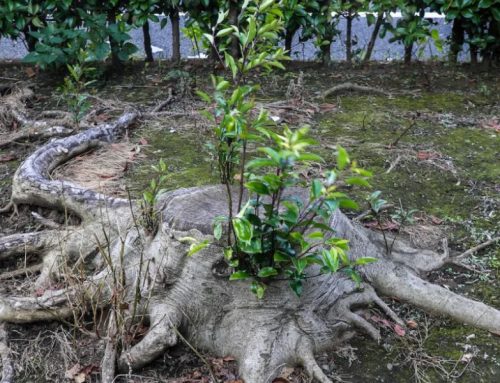

Discovering your tree was knocked down after a storm is cause for immediate concern. Can a fallen tree stand back up? While it sounds unlikely, trees can actually bounce back under the right conditions. The answer depends on the extent of root damage and how fast you act.
Professional tree services in Fredericksburg, TX, can tell you if your fallen tree can be saved or needs to be removed to keep your property safe.
Why Your Tree Fell Over
Understanding what knocked your tree down helps predict its chances of recovery. The tree’s age and type play significant roles in tree stability.
Mature trees with deep roots withstand storms much better than young saplings, which lack strong anchors. Some trees, like Norway maples, naturally grow shallow roots that don’t grip well, so they’re more likely to fall over in strong winds than trees with deeper, sturdier roots.
Common Causes of Tree Failure
Several problems, such as poor health or insect damage, weaken trees and cause them to fall. Warning signs include yellowing leaves, brittle branches, mushrooms around the base, and a cracking bark.
Soil problems also create trouble when sandy ground provides less support than clay or dirt for large trees. Soil saturation from heavy rain causes roots to lose their grip, and even healthy root systems struggle to hold on when water floods the ground.
Construction work near trees often causes hidden root system damage through heavy equipment that shakes the earth while digging exposes and tears delicate networks. This weakened structural integrity shows up later when storms test the damaged tree.
How Trees Right Themselves
Can a fallen tree stand back up naturally through basic physics working in its favor? When wind lifts one side of the root plate, the weight on the opposite side pushes back, creating a seesaw effect. This natural process works better with lighter, younger trees than heavy mature ones that may snap before standing again.
The tree also needs good conditions, such as healthy soil, sufficient water, and sunlight, to successfully grow new roots after partial uprooting.
What Affects Recovery
Not every fallen tree can stand back up, depending on how severe the damage is and whether the root plate remains mostly intact. Trees with severely damaged trunks or severely torn roots cannot recover and need to be removed.
Younger trees have bendable wood and smaller root systems that give them better recovery chances despite falling over more easily at first. Tree type matters because willows regrow very well, while other types lack this ability to bounce back.
Heavy branches and overall weight directly affect whether the tree can stand up again without breaking under the pressure.
When You Need Professional Help
Don’t try DIY fixes with fallen trees because the situation requires a professional tree assessment to check safety and recovery options. Trained tree experts assess tree weight, age, type, and damage level to determine whether replanting might work or whether tree removal services are necessary.
Quick action matters because the longer a tree stays down, the less likely it is to survive and regrow healthy roots. Hidden problems make partially standing trees dangerous, and even trees that look stable may fall without warning or proper support.
Get Professional Help for Your Fallen Trees
So, can a fallen tree stand back up? Sometimes, but don’t assume it’s safe. Hidden damage often makes these trees unstable and dangerous. Saving a damaged tree requires expert evaluation to determine if recovery is possible or removal is necessary.
At Rockoff Tree Solutions, we specialize in Texas Hill Country tree care and provide:
- Tree health management
- Oak wilt management
- Air spading
- Soil aeration
- New development support
Call us at (830) 955-0304 for a thorough assessment.