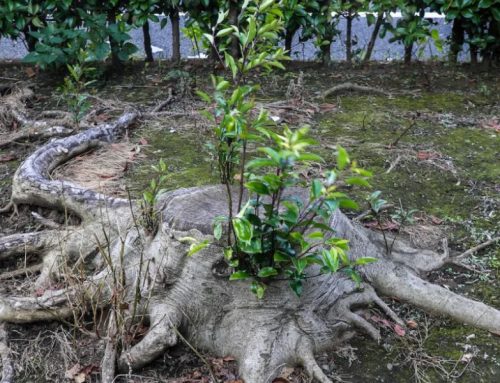

Is your tree sick, or are those growths natural? Knowing how to diagnose common tree problems, like gall and root rot, may save you a lot of aggravation.
In this post, Rockoff Tree Solutions, your trusted arborist in Hunt, TX, discusses how you can recognize these tree issues and how to solve them.
Is Your Tree Sick?
Here are some quick signs that show you the plant’s likely in trouble:
- Bark splitting or fragility: This could be a sign of insects or disease. Be especially wary of large sections of missing bark or vertical cracks. Any issues in this material leave the tree vulnerable.
- Leaf scorch and other leaf issues: If the leaves wither or change their color unseasonably, there may be an issue. You might also find dead leaves that won’t fall off or defoliation that comes around too early.
- Lots of deadwood: Healthy plants are better able to overcome common tree problems like this, so trim your tree regularly. However, if the deadwood seems widespread, it needs investigating.
- Pest activity: Look out for signs like holes in the bark, insects all over the leaves, and mud tubes, and common signs of termites in trees, which can weaken the structure over time.
- Canker and other fungal growth: You’ll see discolored areas or places where the bark is softer than it should be. You might also see mushrooms growing around the base. These are signs of fungal infections like root rot.
- Strange growth patterns: If your tree develops a lean of over 15 degrees, it might be dangerous. This is a sign of impending root lift, which leaves the tree susceptible to wind damage.
- Powdery mildew: This pest spreads quickly, especially with summer’s humidity. It’s caused by too much moisture. That’s why arborists focus on the roots rather than watering the tree’s leaves.
What You Can Do About These Common Tree Problems
It can be difficult to diagnose common tree issues without some experience and a few tools at your disposal. Some tree disease solutions seem fairly obvious – like antifungal agents when there are fungi visible. However, not all issues are that simple.
An abnormal growth might be due to a fungus. It might also be due to gall, an irritation rather than a true disease. If there’s gall from insects laying eggs, an antifungal treatment would be entirely useless to the tree.
Other issues might not show any signs until the damage is far advanced, such as when root rot occurs under the ground. The first sign is the foliage die-off. If you’re lucky, you’ll spot a few mushrooms coming out of the trunk’s base for confirmation of a problem.
What do you do if you’re not sure your tree is sick? Even for common tree problems, call in the tree professionals as early as possible so that there’s a chance of saving the tree! A consultation is a lot cheaper than a hazardous tree.
Should You Remove the Tree?
In some cases, you’re better off removing the tree and starting over. This is the case where the plant’s too badly damaged to recover its full strength. Typically, arborists recommend removal when there’s a danger of the tree falling.
Experts make this call when:
- There’s extensive root damage.
- A lot of the branches are dead.
- Heart rot has set in.
It can be heartbreaking to lose a beloved tree, but sometimes, you have no choice. You don’t want to risk loved ones or property damage.
Contact Us for an Expert Tree Diagnosis
What if you don’t know a harmless beetle from a wood borer? Don’t feel bad; it takes years of study and experience to properly diagnose even the most common tree problems!
Get Rockoff Tree Solutions in when it comes to managing tree disease and pests. Contact us online or at 830-955-0304!