
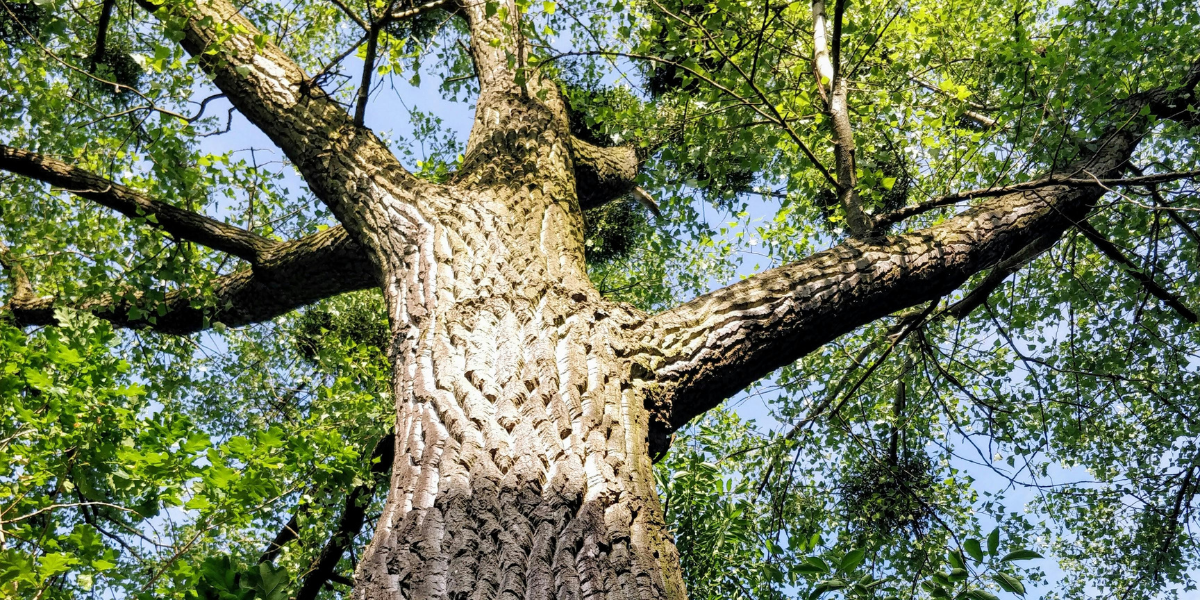
This summer has tested Hill Country oak trees like few in recent memory. Much of Texas has spent weeks under active drought conditions, and Kerrville has felt its share of triple digit days and bone dry soil. Homeowners are noticing something troubling, canopies thinning out, leaves curling at the edges, and branches that seem to be giving up before fall even arrives. It is easy to assume the worst and jump straight to oak wilt, especially in a region where that disease has already been confirmed in five different oak species. But drought stress and oak wilt can look surprisingly similar from the ground, and treating one like the other wastes time your tree may not have. This guide covers what is happening to Hill Country oak trees during a drought like this one, how to tell drought stress apart from oak wilt, whether it is safe to prune right now, and what homeowners can do today to help their trees.
Why This Season’s Drought Is Hitting Hill Country Oaks Hard
Texas is currently experiencing widespread drought, with roughly a quarter of the state in active drought and another quarter listed as abnormally dry as of early September. The Hill Country has been squarely inside that pattern, coming off a stretch of record breaking heat that pushed soil moisture down for weeks. Oak trees are resilient, but they are not immune to sustained heat and lack of rainfall. When the ground dries out this much for this long, a tree’s roots simply cannot pull up the water it needs to support a full canopy.
How Dry Soil Weakens a Tree’s Natural Defenses
A tree under drought stress spends most of its energy just trying to survive, which leaves less in reserve for fighting off disease and pests. Its leaves may shed early, its growth slows, and its usual defenses against fungal invaders and boring insects weaken along with it. This matters because a stressed oak is a more attractive target, not a less attractive one, for problems like oak wilt or wood boring beetles. Our Texas Hill Country Concerns page covers drought, root rot, and construction damage side by side, since they often show up together.
Early Signs Your Oak Is Under Drought Stress
Watch for leaves that curl, wilt, or turn a dull gray green rather than a healthy deep green, along with premature leaf drop weeks before a normal fall. Twigs and small branches may die back from the outer canopy inward, and the tree’s overall growth for the year may look thinner than usual. None of these signs point specifically to oak wilt on their own, which is why so many homeowners get the two confused. If you notice several signs at once, have a certified arborist take a look before assuming the worst.
Is It Safe to Prune Oak Trees in Texas?
Yes, with real caution. Oak wilt’s sap feeding beetles are most active in Texas between February and June, when spore mats on infected red oaks are producing and beetles are flying to fresh wounds on healthy trees. That means the risk of triggering a new infection through pruning is genuinely lower than in spring, and it stays lower through winter. Pruning during extreme summer heat still stresses a tree that may already be working hard just to stay hydrated, so this window should be reserved for necessary or safety pruning.
Why the Beetle Activity Calendar Matters
The beetles responsible for spreading oak wilt above ground are drawn to the smell released by a fresh pruning wound, and they are far less active once summer heat sets in. According to Texas A&M Forest Service’s guidance on preventing oak wilt spread, sap beetles are most active in late winter and early spring, which is why pruning between February and June carries the highest risk. That does not mean pruning carries zero risk, only that it carries less than spring does. Every cut still needs to be treated as an open door for infection until it heals.
Rules to Follow If You Must Prune Now
If a branch is broken, dead, or posing a safety risk, address it now and paint the wound immediately with pruning sealant or exterior latex paint. Sterilize pruning tools between cuts and between trees, since equipment can carry the fungus from one oak to the next. Avoid pruning for shape or aesthetics until temperatures cool, since that kind of cutting can wait without risk. Our Oak Wilt Management page walks through how we diagnose oak wilt risk and treat trees that have already been exposed.
What’s the Difference Between Drought Stress and Oak Wilt?
This is the question we hear most once the heat sets in, and a lab test is the only way to be fully certain. Drought stress tends to affect a tree fairly evenly, with leaves curling, browning at the tips, and dropping across the whole canopy at roughly the same pace. Oak wilt usually starts at the top of the canopy and moves down, often showing veinal necrosis, where the leaf veins turn brown while the tissue between them stays green or yellow. If your tree’s decline looks patchy or concentrated in one section rather than spread evenly, that pattern is worth investigating.
Drought Stress Symptoms to Look For
Leaves that curl inward or droop during the hottest part of the day but recover somewhat overnight are a classic early sign of drought stress. Widespread leaf scorch along the edges, a grayish or dull cast to the foliage, and even leaf drop are common once stress continues for weeks. Growth for the season is usually shorter than in a normal year. These symptoms tend to appear across the entire tree rather than in one isolated section.
Oak Wilt Symptoms to Look For
Oak wilt symptoms often begin at the top of the canopy and progress downward over weeks rather than appearing all at once. Veinal necrosis is one of the more reliable visual clues, though it can be harder to spot in spring when oaks are naturally shedding old leaves. Red oaks infected with oak wilt can die within weeks, while live oaks may decline over months or occasionally survive for years while still spreading the disease underground. Because the two conditions can overlap, a DNA lab sample is often the only way to know for certain.
Protecting Root Systems When Rain Is Scarce
Most of the conversation around drought focuses on what is visible above ground, but the real story is happening underground in the root system. Oak roots extend well beyond the edge of the canopy, and in compacted or poorly draining Hill Country soil, they may already be struggling to access what little moisture is available. Protecting root health during a drought is one of the most effective things a homeowner can do, and it is also one of the most overlooked.
Why Root Health Matters More During a Drought
A tree’s root system handles both water uptake and long term stability, and drought puts extra demand on both at once. Compacted soil, common around new construction, driveways, and heavily trafficked yards, makes it harder for water and oxygen to reach the roots that need them most. When roots cannot access water efficiently, the entire tree suffers, even if the surface soil occasionally gets watered. Oak trees on newer or heavily developed properties often show drought stress earlier than trees in more natural settings.
How Air Spading and Soil Aeration Help Diagnose Problems
Air spading uses high pressure air to expose a tree’s root flare and root system without cutting or damaging the roots, which lets us see exactly what is happening below the surface. This is often how we discover girdling roots, roots planted too deep, or compacted soil that is quietly choking a tree’s ability to take up water. Our Soil Aeration service addresses compaction directly, perforating the soil so water, oxygen, and nutrients can reach the root zone again. Combining an assessment with targeted aeration can be the difference between a tree that recovers and one that keeps declining into fall.
What Hill Country Homeowners Can Do Right Now
You do not need to wait for rain to start helping your oak trees recover from this summer’s stress. A few consistent, well timed habits can make a real difference, even under current water restrictions in much of the region. Small changes now, watering correctly, mulching well, and watching for early symptoms, tend to matter more during a drought than any single fix later on.
Smart Watering and Mulching During Water Restrictions
Deep, infrequent watering at the drip line, the outer edge of the canopy, does more good than frequent shallow watering near the trunk. A two to three inch layer of mulch spread out to the drip line helps soil hold moisture longer and keeps roots cooler during the hottest part of the day. Keep mulch pulled back a few inches from the trunk to avoid trapping moisture against the bark. Check with your local water utility for any drought restrictions before setting a watering schedule.
When to Call In a Certified Arborist
If your oak is showing multiple stress signs at once, if you are unsure whether it is drought stress or something more serious, or if a storm has already wounded the tree, it is worth getting a professional opinion before the situation gets harder to reverse. A certified arborist can assess the whole picture, from canopy symptoms down to root health, and recommend a treatment plan rather than a guess. Waiting until a tree is clearly in crisis usually narrows the options available and raises the cost of treatment. An early consultation is almost always the more affordable choice.
How Often Should Hill Country Trees Be Assessed During a Drought?
During an active drought like the one much of Texas is experiencing this summer, an annual checkup is not quite often enough. We recommend homeowners visually check their oak trees every few weeks during extended dry periods, watching for new leaf drop, canopy thinning, or dieback that was not there before. If you notice a change, or if it has been more than a year since a certified arborist looked at your trees, a professional assessment is a reasonable next step. Catching drought stress or early oak wilt symptoms early gives a tree a far better chance of recovering fully.
Final Thoughts
This season’s drought is putting real pressure on Hill Country oak trees, and that stress can look a lot like the early stages of oak wilt if you do not know what to look for. The good news is that homeowners are not powerless. Watching for early symptoms, watering deeply, being thoughtful about when and how you prune, and paying attention to what is happening below the soil line can all make a measurable difference in how well your trees weather a summer like this one. If your oaks are showing signs of stress, or if you simply want a professional set of eyes on them, our team is here to help. Contact us today to schedule an assessment and get a clear picture of what your trees need to make it through the rest of this dry season.


